Custom Web Applications,Built Around How You Work
Code Nativex provides custom web application development for businesses in the US and UK that have outgrown spreadsheets, off-the-shelf tools, or a fragile first build. We design and engineer portals, dashboards, booking and payment flows, and internal tools that fit your process instead of forcing you into someone else's.
- Scope, price, and timeline before we start
- Fixed
- Releases to a live staging URL
- Weekly
- Paid discovery for an existing codebase
- 1 week
- Of the code and IP owned by you
- 100%
Off-the-shelf tools stop fitting long before the business stops growing.
Custom software is not always the answer. If an existing product does the job, use it. Custom web application development earns its cost when your process is the advantage, when the data volume or logic breaks the tools you have, or when your team spends hours each week stitching systems together by hand.
That last case is more common than it sounds. Before America Working became a product, its records lived in four near-duplicate spreadsheets and subscriptions were confirmed by hand. The web app we built replaced that process and cut manual operational work by about 80%.
We build for both sides of the screen: customers who need to book, order, pay, or check a status without phoning you, and staff who need one dashboard instead of five browser tabs. Our default is server-rendered Next.js, so pages load fast and search engines can read what they should.
Already have an app? We regularly drop into existing codebases to ship a specific feature, audit the architecture, or work alongside your in-house team. That starts with a paid one-week discovery, so we understand the code before we commit to a scope.
Web applications that do real work.
Every item below is running in a live client product today.
Customer portals
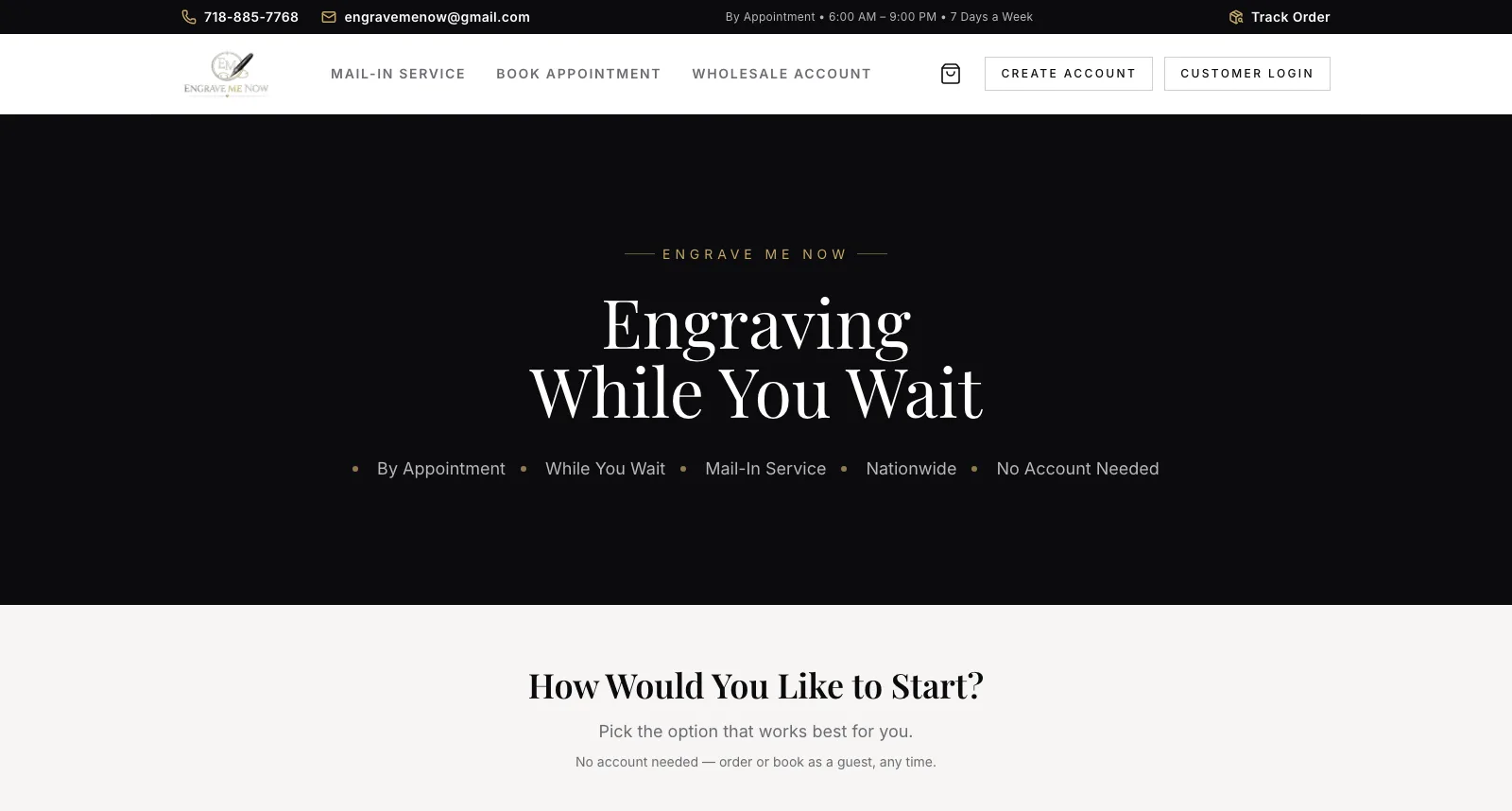
Accounts, order tracking, and step-by-step flows customers finish on their own. Engrave Me Now customers book, pay, and track orders without creating an account.
Booking and scheduling
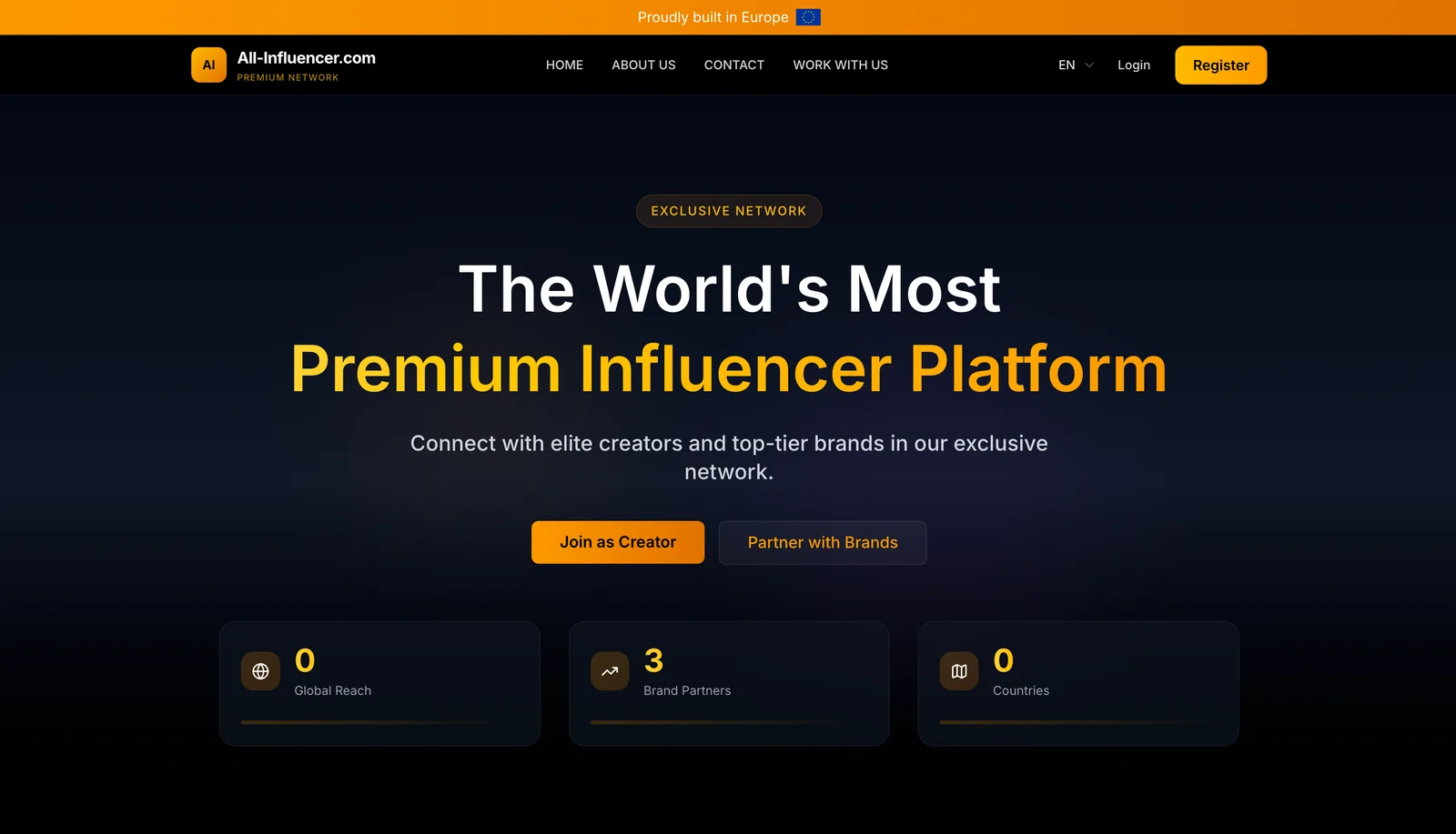
Availability, deposits, and booking rules built into the flow, from live creator availability on All Influencer to same-day slots that close 30 minutes ahead.
Payments and checkout
Stripe checkout, multi-currency payments, subscriptions, and Connect payouts, reconciled through webhooks so nobody chases a transfer by hand.
Dashboards and reporting
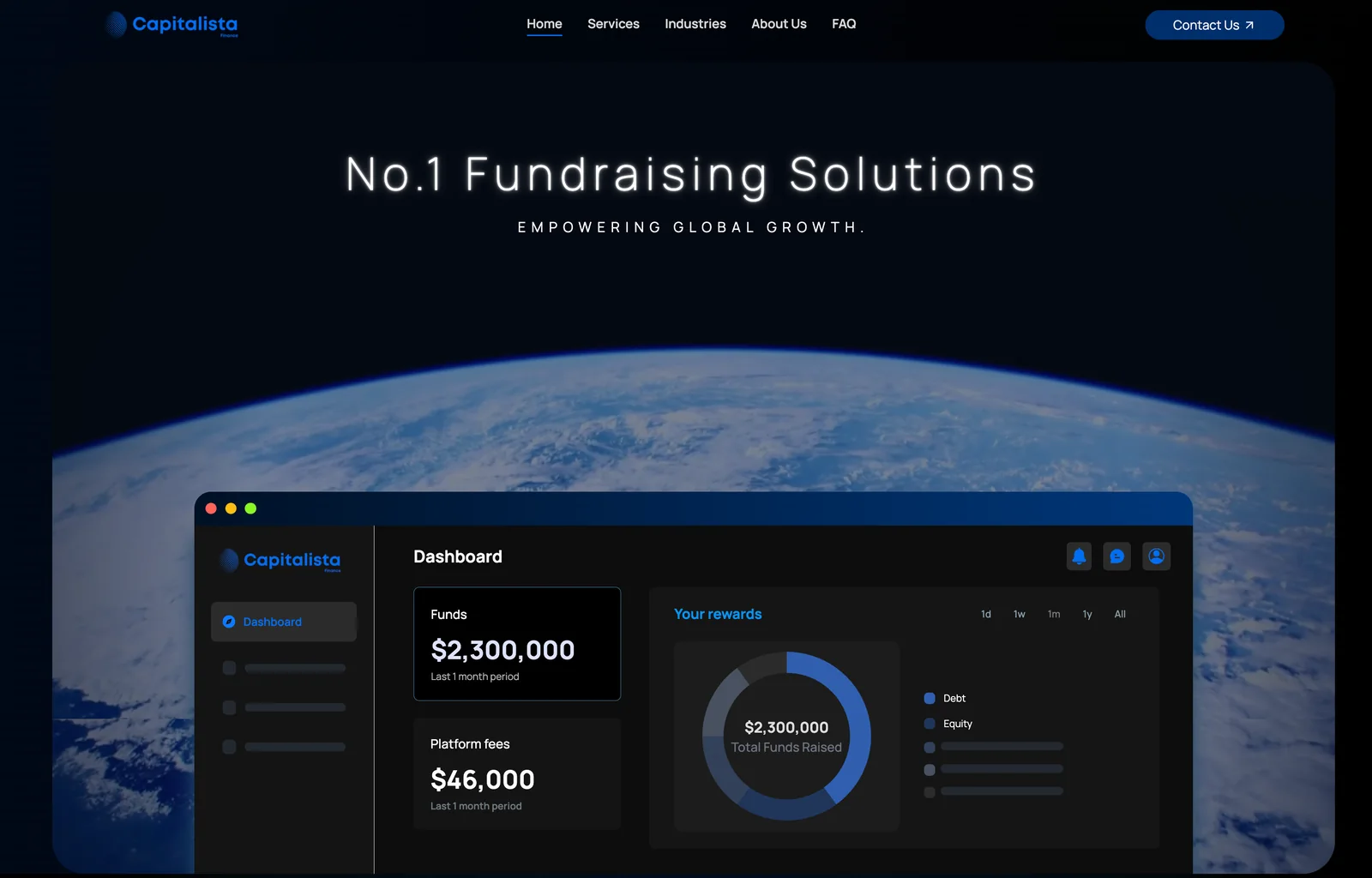
Real-time dashboards for customers, investors, or your own team. Capitalista's investor dashboard refreshes positions and activity without a page reload.
Marketplaces
Two-sided platforms with tiered memberships, bookings, and secure payment workflows that protect both sides of the transaction.
Data migration and ETL
Re-runnable pipelines that move legacy data into a clean Postgres schema, with a quarantine table for bad rows and nothing lost on the way.
Content-managed platforms
Headless CMS setups so a non-technical team can publish new pages, products, or stories without an engineer in the room.
Storage and file delivery
AWS S3 storage with signed URLs that expire with a subscription, and image pipelines that keep large-format photography sharp and fast.
A fixed plan, then weekly proof of progress.
You see working software every week, not a big reveal at the end. The scope and timeline are agreed before the build begins.
- 01Week 0
Discovery call
We map who uses the app, what it replaces, and what launch means for you. For an existing codebase, this becomes a paid one-week discovery before we commit to a scope.
- 02Week 1
Figma prototype
Every screen and every state designed in Figma, including empty, loading, and error. You approve it before production code is written.
- 03Weeks 2–8
Build
Senior engineers ship in weekly increments to a live staging URL, with a written update each week, so feedback lands while it is still cheap to act on.
- 04Launch
Launch and handover
Production deploy, monitoring, and documentation, including an operator runbook when your team will run the app day to day.
Default stack
- Next.js
- React
- TypeScript
- Tailwind CSS
- Node.js
- PostgreSQL
- AWS S3
- Stripe
- Headless CMS
- Figma
Three different businesses, one standard.
A fintech platform, a booking and ordering system, and a two-sided marketplace, all live in production.
Have a process that needs its own software?
Describe what your team does today and what should change. We will reply with a fixed-scope, fixed-price proposal for the web app.
How to compare web application development companies.
Most proposals look alike. These are the differences that show up six months after launch.
- 01
Ask how they handle the states nobody demos
Empty screens, failed payments, expired sessions, and slow networks. On America Working every state was in the Figma file before UI code started, so QA held no surprises.
- 02
Ask where permissions are enforced
If access checks live only in the interface, one bug can expose data. On America Working, roles are checked at the database layer, so a route handler cannot bypass them.
- 03
Ask for a fixed scope in writing
A fixed-scope, fixed-price proposal makes the agency own its estimate. Open-ended hourly billing makes you own it.
- 04
Ask what you will own
Code in your repository from day one, IP assigned to you in the contract, and documentation good enough that another team could take over.
- 05
Ask for performance numbers
Speed is a feature. America Working's page loads went from a 6-second average to 1.4 seconds after two query rewrites and a cache layer.
Web app development questions, answered.
01How long does custom web application development take?
A focused first version typically ships in 6–8 weeks. Larger builds with payments, roles, and admin tooling take 10–14 weeks. The timeline is fixed in the proposal before work starts, and progress is visible on staging every week.
02Should we build a custom web app or use an off-the-shelf tool?
Use an existing tool when it fits your process. Build custom when your process is the advantage, when the tools break under your data volume or logic, or when staff spend hours each week moving data between systems by hand.
03Can you work on our existing web application?
Yes. We regularly ship features into existing codebases, audit architectures, and augment in-house teams. We start with a paid one-week discovery to understand the code before committing to a scope.
04Which technologies do you use for web apps?
Our default is Next.js, TypeScript, and Tailwind on the frontend, with Node.js, Postgres, Supabase, or AWS on the backend and Stripe for payments. It ships fast, scales, and has a deep hiring pool, so you are never locked to us.
05Will you sign an NDA before we share details?
Yes. We sign a mutual NDA before any sensitive material is shared, using your template or ours, whichever moves faster.
Guides from our engineers.
Practical articles on the decisions behind this kind of build.
More from the same senior team.
Design, engineering, and AI under one roof, so nothing gets lost between handoffs.