SaaS Development Agency,From MVP to Recurring Revenue
Code Nativex is a SaaS development agency for startups and growing businesses in the US and UK. We design, build, and launch multi-tenant SaaS products with Stripe billing, role-based access, and the admin tooling you need to run them, delivered to a fixed scope and timeline agreed before work starts.
- Typical time to a launched MVP
- 6–8 weeks
- Full production SaaS with payments and admin
- 10–14 weeks
- Scope and price agreed before we start
- Fixed
- Of the code and IP owned by you
- 100%
You have a SaaS idea or an early product. Now it has to hold up.
Most SaaS products struggle on the parts nobody demos: tenant isolation, billing edge cases, permissions, and the admin screens your team needs on day two. A landing page and a login are quick. A product that bills correctly when a card fails, keeps one customer's data away from another, and survives its first thousand users takes engineering judgment.
We work with founders validating a first product, operators turning a manual service into software, and teams whose MVP has outgrown the shortcuts it was built on. You get one senior team covering product design, engineering, and AI features, so decisions do not get lost between agencies.
Every engagement starts with a fixed-scope, fixed-price proposal. You know what is being built, when it ships, and what it costs before any work starts. During the build you get a written update every week and a live staging URL you can test at any time.
When the product is live, the code, database schema, design files, and deployment configs are yours. We sign an IP assignment as part of the contract and never lock you into our infrastructure.
The SaaS foundations, done once and done right.
The parts every subscription product needs, built on a stack your next hire will already know.
Multi-tenant architecture
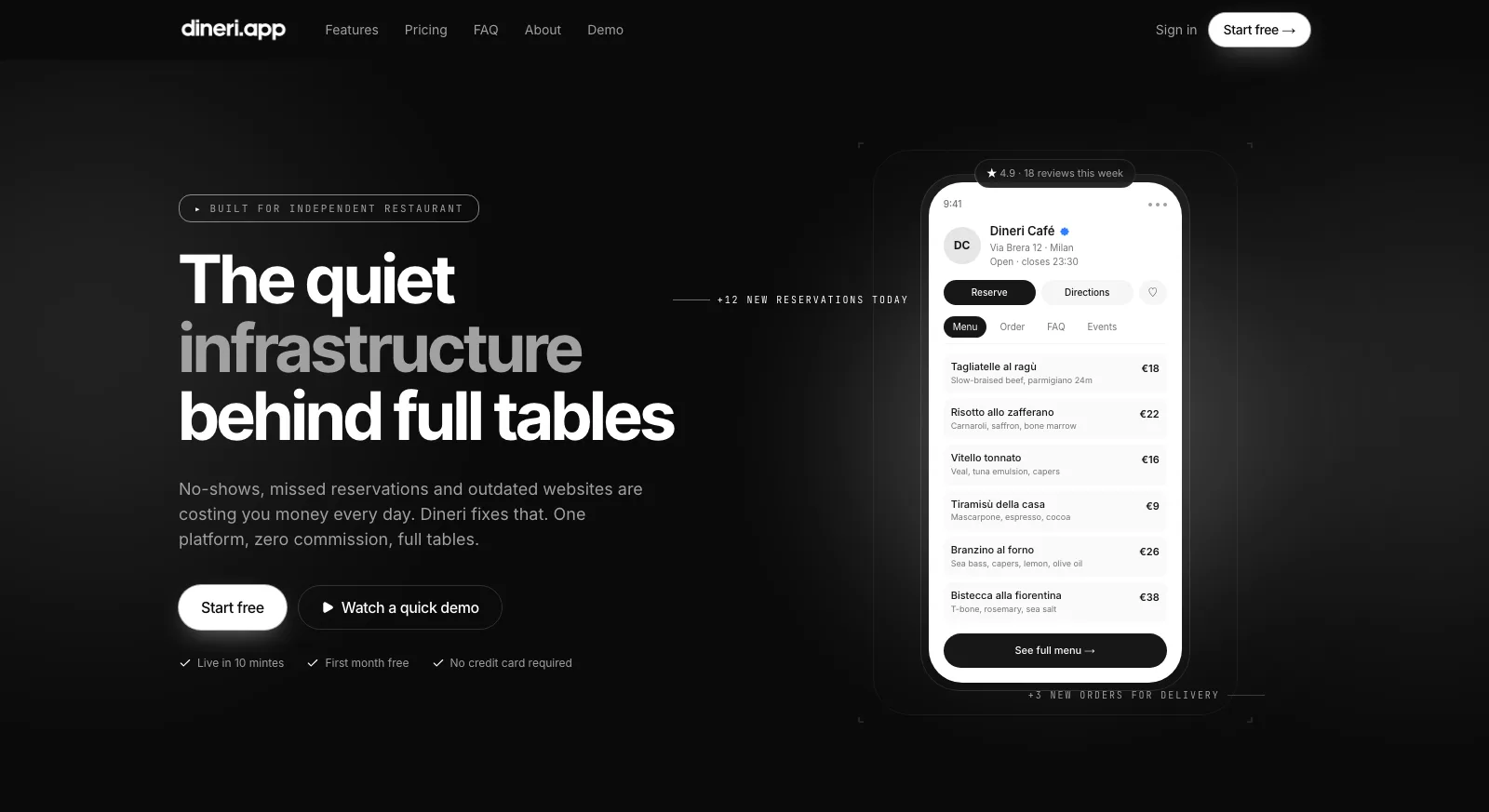
Each customer gets an isolated workspace on shared infrastructure. Dineri gives every restaurant its own subdomain, colors, and logo on one platform underneath.
Stripe billing and subscriptions
Checkout, plans, the Customer Portal, failed cards, and refunds, plus Stripe Connect payouts for marketplaces. Entitlements are written by webhooks, never by the UI.
Auth, roles, and permissions
Sign-up, login, and password recovery, with role checks enforced at the database layer so a bug in one route cannot leak paid data to a free user.
Dashboards and admin tooling
Real-time dashboards and reporting for your customers and your own team, so running the business never needs an engineer to write a query.
Data migration and ETL
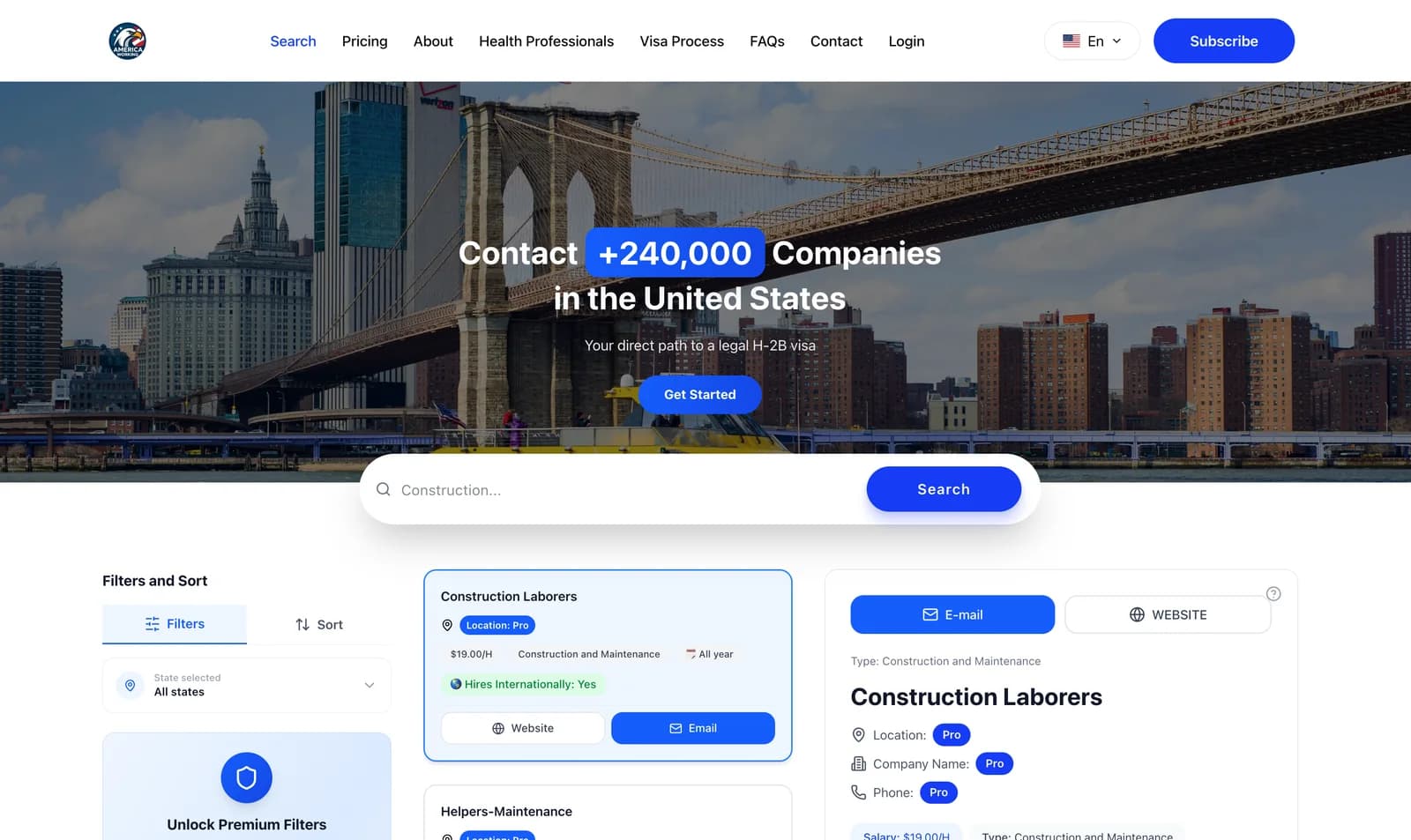
Custom pipelines that move spreadsheets or a legacy database into a clean Postgres schema. On America Working we migrated 240,000+ data points with zero data loss.
AI features
AI built into the product where it earns its place, on the OpenAI API and LangChain, with retrieval over your own data when answers must be grounded.
Multi-language builds
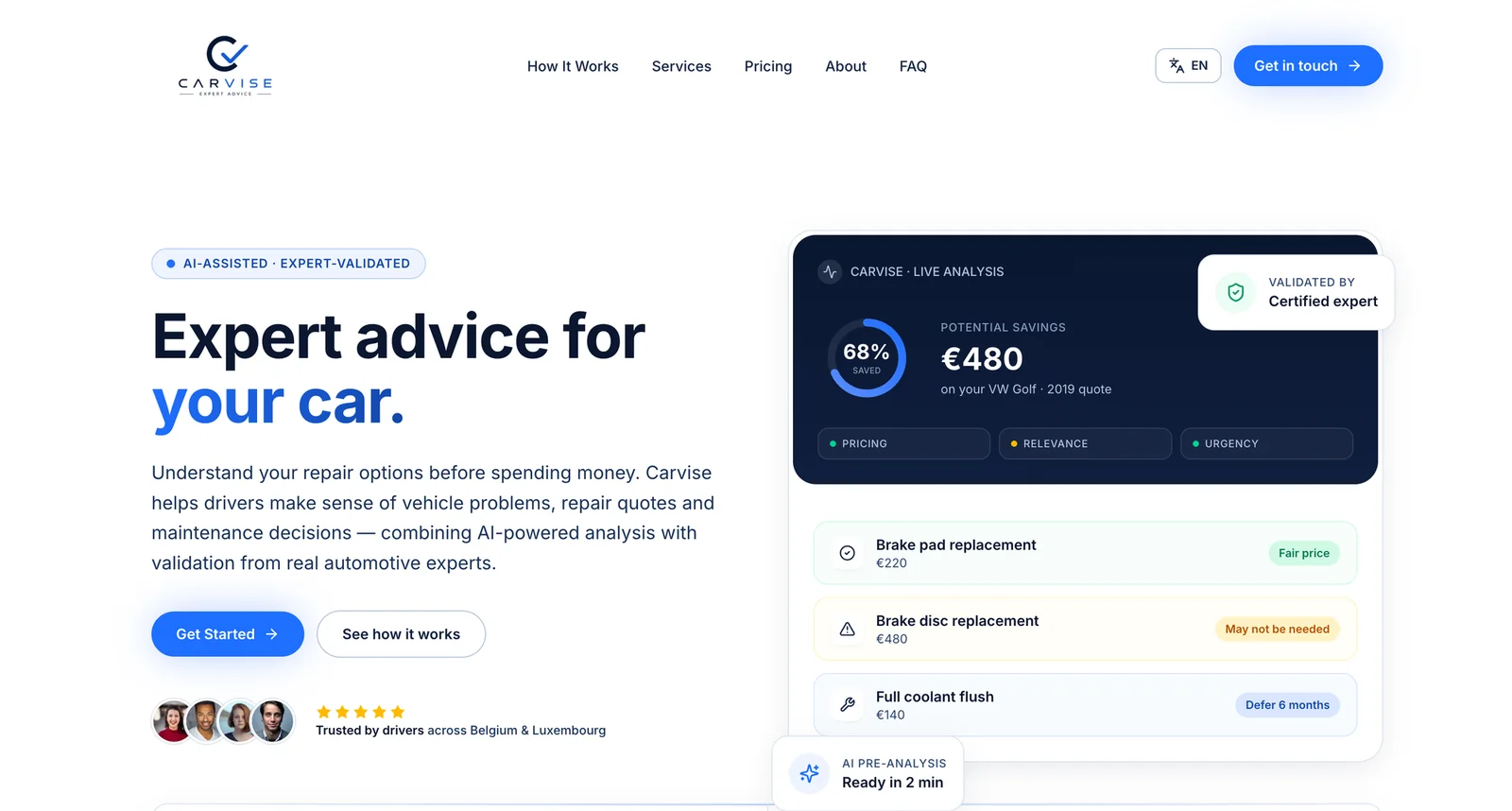
Internationalization wired in from the first commit, not bolted on later, with edge-cached delivery. Carvise runs its whole product in English, French, and Dutch.
Lifecycle email
Onboarding, billing, and retention emails triggered by product events instead of someone's calendar, all sent through one pipeline.
From first call to paying users in weeks.
A typical MVP ships in 6–8 weeks. The timeline is fixed in the proposal, and you can test progress on staging every week.
- 01Week 0
Scope and proposal
A 30-minute call with the founder to map your users, pricing model, and launch goal. We sign an NDA before anything sensitive is shared, then send a fixed-scope, fixed-price proposal.
- 02Week 1
Data model and design
Tenants, plans, and roles are modeled before screens. Flows are designed in Figma, and you approve the prototype before production code is written.
- 03Weeks 2–8
Build in weekly releases
Auth, billing, and the core workflow first, then admin tooling. Every change lands on a live staging URL with a written update each week.
- 04Launch
Launch and handover
Production deploy, documentation, and an architecture overview in your repository. About 70% of clients then move to a monthly retainer to keep shipping.
Default stack
- Next.js
- TypeScript
- Tailwind CSS
- Node.js
- PostgreSQL
- Supabase
- AWS
- Stripe
- OpenAI
- LangChain
Live products, not concept work.
Three SaaS platforms in production, each solving a different hard part of the model.
Tell us what your SaaS needs to do.
Share the idea, the users, and the launch date you have in mind. We will reply with a fixed-scope, fixed-price proposal.
Five questions to ask any SaaS development agency.
Including us. The answers tell you more than a portfolio does.
- 01
Have you built billing, roles, and tenancy before?
These are where SaaS projects slip. Ask to see a live product that handles failed payments, plan changes, and per-tenant data. Ours are linked above.
- 02
Is the price fixed, and what does it cover?
Hourly estimates drift. A fixed-scope, fixed-price proposal puts the risk of underestimating on the agency, and nothing should be added to the scope without your sign-off.
- 03
Who owns the code, and where does it live?
It should sit in your repository from day one, with an IP assignment in the contract. If an agency hosts your code or licenses it to you, you are renting your own product.
- 04
What happens if a developer leaves?
Every project should have a backup engineer who already knows the codebase. Ours do, and with documentation and clean commit history a handoff takes hours, not weeks.
- 05
Will my next hire recognize the stack?
Next.js, TypeScript, Postgres, and Stripe have deep talent pools and are what most acquirers expect to see. An unusual stack keeps you dependent on the people who chose it.
SaaS development questions, answered.
01How long does it take to build a SaaS MVP?
A focused MVP typically ships in 6–8 weeks. A full production SaaS with payments, multi-tenancy, and admin tooling takes 10–14 weeks. The timeline is fixed in the proposal, and you can test progress on a live staging URL every week.
02How is a SaaS development project priced?
Each project is priced on its scope. After an initial call we send a fixed-scope, fixed-price proposal, so you know the full cost before any work starts. There is no hourly billing on product builds and no scope change without your sign-off.
03Can you take over an existing SaaS codebase?
Yes. We start with a paid one-week discovery to understand the code and the decisions behind it, then commit to a scope. We regularly ship features into existing products, audit architectures, and work alongside in-house teams.
04Do we own the code and IP?
Yes, all of it: the code, design files, database schema, deployment configs, and IP. We sign an IP assignment as part of the engagement and never license our code to you.
05What happens after the SaaS launches?
You can request changes one at a time, each quoted at a fixed price, or move to a monthly retainer of engineering hours. About 70% of our clients choose a retainer because it is the most cost-effective way to keep shipping.
Guides from our engineers.
Practical articles on the decisions behind this kind of build.
More from the same senior team.
Design, engineering, and AI under one roof, so nothing gets lost between handoffs.